Montessori Approach to Nutrition and Joyful Eating
loading...
Don't just feed your child.
Help them learn how to eat.
A practical Montessori-inspired course that shows you how to support self-feeding, calm mealtimes, concentration and growing independence — one developmental stage at a time.
Buy Now
Amazing Feature
Lorem ipsum dolor sit amet, metus at rhoncus dapibus, habitasse vitae cubilia.
Amazing Feature
Lorem ipsum dolor sit amet, metus at rhoncus dapibus, habitasse vitae cubilia.
Amazing Feature
Lorem ipsum dolor sit amet, metus at rhoncus dapibus, habitasse vitae cubilia.

Feeding your child isn’t just about what they eat.
It’s about how they learn to eat.
From the very first feeds to shared family meals, eating is one of your child’s earliest and most powerful learning experiences. It shapes their relationship with food, their sense of independence, their ability to listen to their body — and even how they experience connection and belonging at the table.
This course is not about rushing milestones or perfect plates.
It’s about raising a child who feels calm, capable, and joyful around food.
THE COURSE JOURNEY
Start where your child is. Each stage helps you understand what they are developing and what you can do to support them without turning mealtimes into another thing to perfect.
-
Introduction to Montessori
4 lessons- Background On Dr. Maria Montessori
- Tenets Of The Montessori Philosophy
- How can you as a parent support your child by embracing Montessori Principles
- About Me
-
0–3 Months: The Foundations of Respectful Feeding
2 lessons- Feeding Basics
- Montessori Approach to Newborn Feeding
-
4–6 Months: Preparing for Baby-Led Weaning & a Positive Relationship with Food
7 lessons- Why Baby-Led Weaning?
- Practical Tips for Baby-Led Weaning
- What is Ellyn Satter’s Division of Responsibility
- Overview of the Child's Role in the sDOR
- Overview of Parental Responsibilities in sDOR
- Implementing BLW and or/ sDOR in alignment with Montessori Principles
- Benefits & Challenges of BLW and sDOR
-
7–9 Months: Weaning, Solids & Growing Independence
6 lessons- Preparing for Weaning and Self-Feeding the Montessori Way
- Transitioning to Solid Foods
- Encouraging Self-Feeding Skills
- The Montessori Perspective on Mess and Cleaning during BLW
- The Early Stages: Messy but Important
- Tips for Managing the Mess
-
10–12 Months: Joining the Family Table
11 lessons- The Role of the Family Meal and Shared Mealtime
- Benefits of Shared Mealtime
- Involving Your 10–12-Month-Old in Family Meals
- Montessori Meal Setting
- The Montessori Perspective on Highchairs
- Introducing Cutlery
- Significance of Child-Sized Utensils for 10-12 Month Olds
- Significance of Child-Sized Furniture for 10-12 Month Olds
- How to Introduce Child-Sized Dining Essentials?
- Why Use Real, Non-Toxic Cutlery?
- Introducing Glass and Steel Utensils
-
13–15 Months: Building Focused, Joyful & Independent Mealtimes
7 lessons- Montessori’s Approach to Mealtime
- Benefits of a Weaning Table
- Setting Up a Montessori Weaning Table
- Introducing a Variety of Foods in a Respectful, Child-Led Manner
- Enhancing Coordination through Mealtime
- Creating a Supportive Eating Environment
- Fostering Concentration During Mealtime
-
16–18 Months: Self-Regulated Eating & Practical Life
3 lessons- Guiding Principles for a Balanced and Self-Regulated Approach to Eating
- Involving Your Child in Meal Preparation
- Practical Life Meal Preparation Activities for 16-18 month old toddlers
-
18+ months and onwards - Confident and Food Loving
2 lessons- Reintroducing Disliked Foods
- How to involve your child in food preparation and table setting
-
Resources
1 lesson- Resources
-
Disclaimer
1 lesson- Disclaimer
What makes this course different?
Most nutrition courses focus narrowly on introducing solids.
This course goes further.
The Montessori Approach to Nutrition and Joyful Eating supports parents in building a holistic, respectful, and developmentally aligned relationship with food — covering not just what your child eats, but:
✅ how meals are experienced
✅ how independence is fostered
✅ how routines support regulation
✅ how the eating environment invite confidence
✅ and how parents move from anxiety to trust
Nutrition here is not a checklist.
It’s a daily practice of respect, rhythm, and connection.
What changed at their table.

“This isn't a typical nutrition course.”
It's not just about what foods to introduce or how to prepare them. It completely shifted how I think about eating itself. The focus on respect, independence and mealtimes as a learning experience helped us think about a lifelong relationship with food — not just getting through solids.
Sowmya, HRO

“People are genuinely surprised when they watch my son eat.”
In my culture, children are usually fed by adults for years, often distracted by screens. After following this course, my son now sits independently, focuses on his food, and eats without a screen — and it honestly blows people’s minds when they watch him eat. We get asked all the time what we did. I highly recommend this course for anyone wanting screen-free, calm eating habits
Charlene, Tax Advisor

“It goes much deeper than starting solids.”
I genuinely don’t think there’s another course out there that teaches parents how to build a positive relationship between a child and food. Most information stop at starting solids. What stood out for me is the focus on building a positive relationship with food through trust, routines and respect. It gave me confidence instead of anxiety.
Farha, Teacher
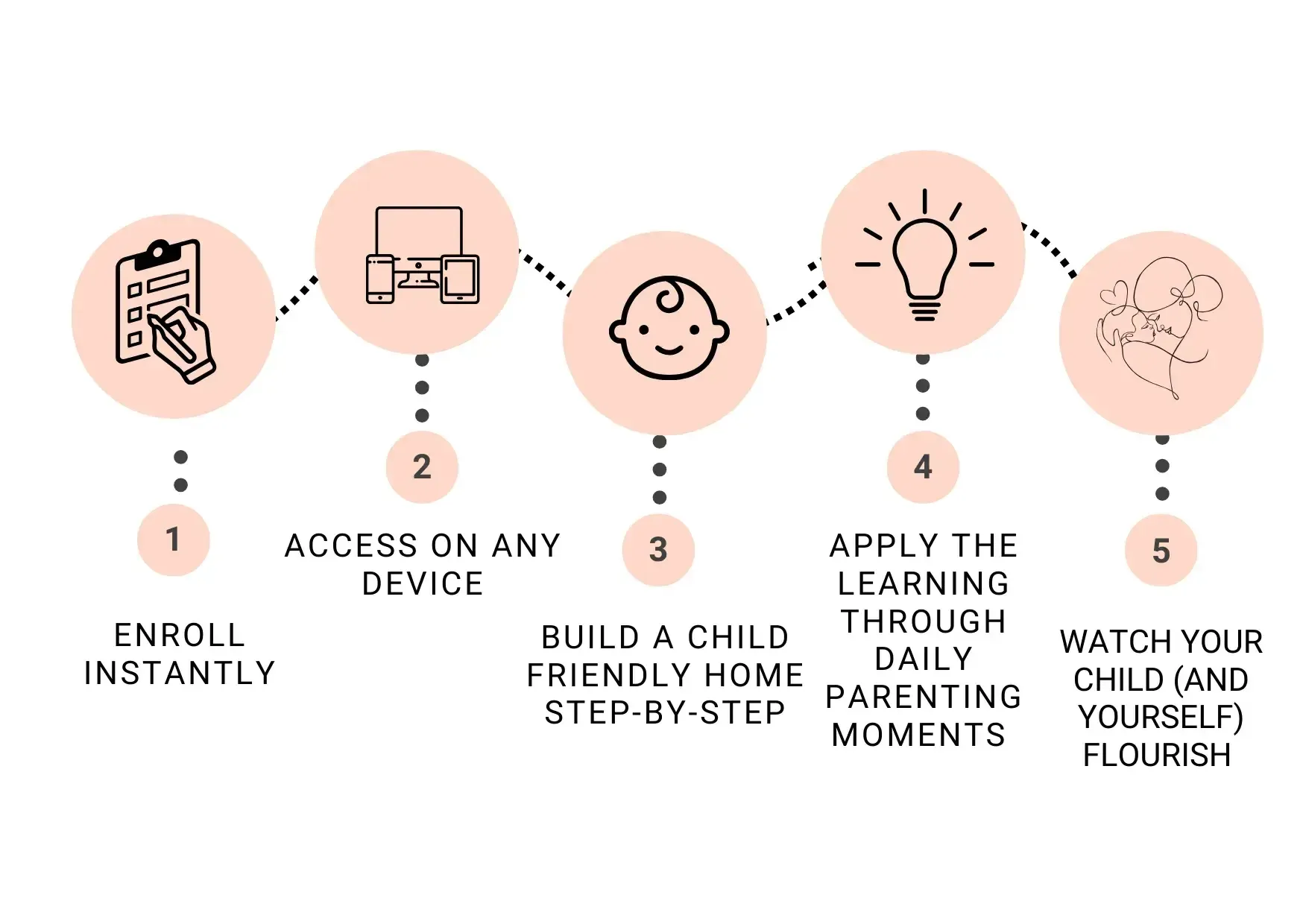
Grow With Grace: A Path Where You and Your Child Learn Side by Side
This is a shared journey where you build trust, presence, and calm at mealtimes, while your child develops a confident, healthy relationship with food.
This course is for you if…

✅ You want to avoid force-feeding, bribing, or power struggles.
✅ You feel overwhelmed by conflicting feeding advice online.
✅ You want to raise a child who enjoys eating, not fears it.
✅You care about nurturing independence, respect, and emotional security at the table
✅You want to raise a child who enjoys eating with focus and presence, not one who eats mindlessly in front of a screen.
If you're nodding “yes,” you're in the right place!
You’re not alone. We’ve helped thousands of parents feel calm, confident, and connected through our Mindful Montessori Approach to Nutrition and Joyful Eating
The Montessori philosophy behind the course
At the heart of this course is a simple belief:
Children are capable — when we trust them and prepare the environment.
You’ll learn how to:
✅ Guide without pressure
✅ Create mealtimes that encourage focus and invite independence
✅ Respect your child’s pace and appetite
✅ Shift from anxiety to confidence as a parent


NICE TO MEET YOU
Hi I'm Tribly Dsouza
A Montessorian, a full-time corporate professional, and a mother of two spirited, soulful little girls. I’m also a historian and gardener by hobby and proudly TV-free. I live without domestic help, so every meal cooked, every tantrum navigated, and every bedtime snuggle is real life—not a curated reel.
I discovered Montessori ten years ago, in the darkest and most disorienting moment of my life. My firstborn arrived into a world that had suddenly pulled the rug from under me. Everything that could go wrong did—and within four days of her birth, I was completely alone. No village. No guidance. Just love… and fear.
In those lonely, fragile days, I stumbled upon Maria Montessori’s work—and something clicked. It was gentle. It was profound. It was everything my heart intuitively knew… finally put into words.
Since then, Montessori has been my compass—not just for parenting, but for living. And no, I didn’t DIY sensory bins or build Pinterest-perfect play spaces. I didn’t have time for that—I had a job to return to, bills to pay, and a baby to raise. But I did build something else: connection, clarity, and an unshakable bond with my daughters.
That’s why I created the Montessori Mindful Parenting Courses. To make this timeless wisdom easy, affordable, and accessible—not in the superficial sense of quick hacks or flashy reels, but in the true spirit of Montessori:
-
Easy, because the books I read were in dusty Victorian English—You can simply watch or listen to short, bite-sized lessons in modern English
-
Affordable, because this philosophy has long been reserved for those who could afford elite preschools
-
Accessible, because every parent deserves a thoughtful, empowering guide—and every child deserves a fair go, no matter the background
I don’t promise instant gratification. I promise deep, lasting transformation—for you, your child, and your shared journey.
If you’ve ever whispered, “there has to be a better way,” I’m here to tell you: "there is". And it starts here.